Opinion Piece by Mariah Harris, Senior Apparel Merchandising Major, Baylor University
So… Did Kai Cenat Actually Quit Streaming?
Whenever Kai Cenat announced to the world that he was stepping away from streaming, the internet lost it. People responded as if he jumped straight into the deep end. Since he built his entire career on Twitch and YouTube, the idea of him quitting to start a fashion brand sounds risky.
But sometimes this media stunt may actually be calculated.
Kai’s decision to focus on his fashion brand, Vivet, has people split. Some think it’s a smart reroute. Others think it’s just another influencer brand with a nicer logo and good funding. He began the brand by announcing the e-commerce site and journal, followed by the new limited drop. So the real question is, is this a power move, or is he getting caught in something bigger than he can’t handle?
To figure that out, you can’t only look at the internet’s reaction. You have to look at the strategy behind it.
Kai isn’t an industry plant. He’s 24, from New York, and has been building his online presence for years. Before the brand deals and viral moments, he was just posting skits and YouTube videos because he was funny and people liked watching him. That personality is what got him to where he is now: over 17 million followers on Instagram, 21 million on TikTok, and around 20 million on Twitch.
He’s also done a lot for other creators through AMP and Streamer University, which helped him build trust with his audience. Now that he’s pivoting into fashion after releasing his “I Quit” video, people are questioning whether this move is real or just for show.

Source: Cenat, Kai. “I Quit”. YouTube (2026). https://www.youtube.com/watch?v=rkdzxRaI68g
The Journal Everyone Has an Opinion On
If we’re honest. At first glance, this whole fashion pivot feels performative. Another influencer switching aesthetics and calling it a rebrand.
But here’s the kicker: being performative is literally Kai’s job.

Source: IT WILL LIVE Pre-Order. (2026) Vivet. https://vivetwears.com/products/it-will-live
The main thing people are skeptical of is the Vivet journal and the YouTube videos of him trying to read and focus on wellness. Kai made an appearance at several fashion shows and at Paris Fashion Week, carrying his journal. A lot of people online have made jokes about this new rebrand and claimed that it is pure performance.
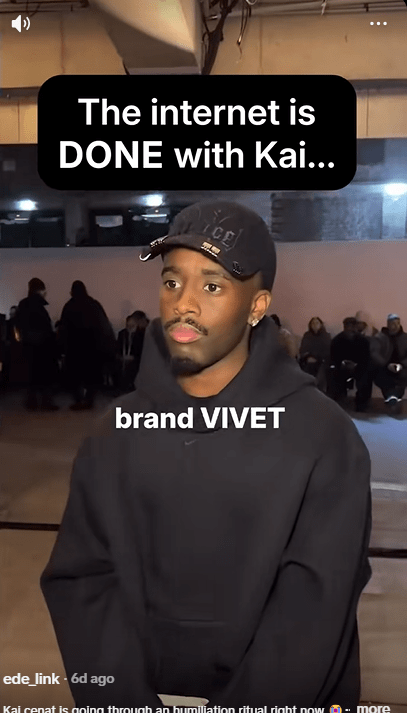
Source: User @ede_link. TikTok. https://www.tiktok.com/@ede_link/video/7598701064942243092
From a business standpoint, starting with a journal is smart. It’s low-cost, and it sets the tone for the brand. It works well as a brand statement. Vivet isn’t starting with clothes but with an idea.
The journal shows Kai’s thought process while traveling in Italy, learning about fashion production, and trying to actually understand the industry instead of jumping straight into selling hoodies. That strategy builds hype and meaning before the product even publicly exists.
A lot of brands mess up by dropping the product first and figuring out the story later. Vivet is doing the opposite.
Fashion has always been about performance. Runway shows are a performance. Campaigns are performance. Brands sell a lifestyle rather than just clothes. So the issue isn’t whether Vivet is performative. It’s whether that performance is strong enough to turn into a real, viable business.
Okay, But Will Vivet Actually Work?
Being famous doesn’t guarantee success in fashion. Rihanna’s Fenty fashion house shut down after only two years, even with LVMH backing it (Forbes, 2021). That alone proves that visibility can’t save a brand if the timing, pricing, or operations aren’t right.
Kai definitely has advantages. He has an audience, engagement, and cultural relevance. But he also has risks. The brand is closely tied to him, which can make it hard to grow beyond his identity. Another challenge will be turning content hype into people actually buying products because they want them, not just because it’s Kai.
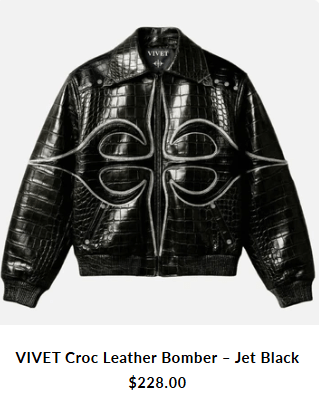
Source: VIVET Collection. Vivet (2026). https://vivetwears.com/collections/vivet-collection
There’s also the question of pricing. Is Vivet meant to be accessible for his younger audience or more aspirational? That choice matters more than aesthetics.
Most fashion brands don’t fail because the aesthetics aren’t good. They fail because of bad strategy, bad inventory planning, bad distribution, or oversaturation. If Vivet starts small, controls quality and prices intentionally, and doesn’t rush the growth, it actually has a chance.
Performance brings attention. Good execution brings revenue.
So… Power Move or Not?
Yes, Kai Cenat is performative.
And yes, this could still be a power move.
Every successful fashion brand performs in some way. Vivet already has a story, an audience, and cultural relevance. What will decide everything is how well the brand is run behind the scenes.
A riptide is only dangerous if you fight it. If you move with it strategically, you can get out safely. If Kai treats Vivet the same way by staying patient, learning, and not forcing success, this pivot could take him somewhere new.
In fashion, it’s not about avoiding risk. It’s about knowing how to move through it.
Sources:
https://en.wikipedia.org/wiki/Kai_Cenat
https://www.cnn.com/style/article/rihanna-fenty-fashion-close-down
https://www.rap-up.com/article/kai-cenat-attends-first-paris-fashion-week-vivet-journal




 The Green Thread
Leave a comment